

If you have a heat pump in your home, or you are thinking about installing one, there is one thing we wish more homeowners across Southwestern Ontario understood: a heat pump is not supposed to feel exactly like a traditional furnace. That does not mean something is wrong. It means it works differently. And when you know how to use your heat pump properly, you can get better comfort, better efficiency, and fewer frustrating surprises in the middle of winter. Heat pumps move heat instead of creating it through combustion, and modern systems can provide both heating and cooling year-round.
At Handy Bros., this is one of the biggest education gaps we see. Homeowners are often told a heat pump is efficient, but they are not told what to expect day to day. They are not told about defrost cycles. They are not told that the air may feel different than furnace heat. They are not told how thermostat behaviour changes. And they are definitely not told how much proper sizing and installation affect noise, comfort, humidity, and system performance. HRAI notes that sizing is critical, and that oversized or undersized equipment can create hot and cold spots, noise, poor humidity control, higher operating costs, and trouble keeping up in extreme weather.
That is exactly why we wanted to write this guide.
What a Heat Pump Is Actually Doing
A heat pump works a lot like a refrigerator in reverse. It uses a refrigeration cycle to move heat from one place to another. In winter, it pulls heat from the outdoor air and brings it inside. In summer, it reverses the process and removes heat from your home to cool it. That reversing action is one of the reasons a heat pump can heat and cool your home with one system. If you want a deeper look at that process, here is more on how a heat pump cools your home.
For homeowners, the important part is this: your heat pump is designed to run smarter and steadier than older, more aggressive on-off heating systems. Many modern systems are built to maintain comfort over longer runtimes instead of blasting high-temperature air in short bursts. DOE also notes that newer systems, especially variable-speed designs, can help reduce noise and improve humidity control.
So when people ask, “How do we use our heat pump properly?” the answer starts here:
Don’t expect it to behave like a furnace. Expect it to deliver comfort differently.
The First Rule: Set It and Let It Work
One of the most common mistakes homeowners make is constantly adjusting the thermostat.
With many heat pump systems, large temperature setbacks can work against efficiency and comfort. If you drop the temperature too much overnight and then try to recover quickly in the morning, your system may call on backup heat depending on the equipment and controls. That can increase energy use and create confusion when homeowners think the heat pump itself is failing. The better approach in most cases is steady operation with modest adjustments, especially during cold Ontario weather. Heat pumps are designed to maintain temperature, not always recover from big swings as aggressively as furnace-based systems.
What we recommend homeowners do:
- Pick a comfortable setting and avoid constantly raising and lowering it
- Make smaller changes instead of dramatic setbacks
- Give the system time to respond
- Use the thermostat mode your installer recommends for your setup
- Ask how your backup heat is staged and when it is expected to turn on
This is where proper setup matters. At Handy Bros., we believe understanding the equipment is only half the job. The other half is making sure it is prepared, installed, and commissioned properly so the homeowner is not left guessing. Our team builds quality into the process through our Handy Bros. Academy, our AAA standards, and our in-house preparation systems.
Why the Air May Feel Different Than Furnace Heat
This is probably the number one thing homeowners notice first.
A furnace often delivers very warm air in short, intense cycles. A heat pump usually delivers air that feels milder, even while it is heating effectively. That can make some homeowners think, “It’s not hot enough,” when in reality the system is doing exactly what it should.
That difference in feel is normal. A heat pump is focused on maintaining indoor comfort by transferring heat efficiently over time. The air coming out of the vents may be warm, but it may not feel as hot as furnace air against your hand. That is not the right test. The better question is: Is the house comfortable and holding temperature? A properly installed heat pump should do that well.
What homeowners should expect:
- Longer runtimes
- More even temperatures
- Fewer dramatic bursts of heat
- A gentler airflow temperature than a gas furnace
- Consistent comfort when the system is sized and set up properly
When equipment is not sized correctly, that is when problems show up. HRAI specifically warns that oversizing can create hot and cold spots and higher noise, while undersizing can leave a system unable to keep up in temperature extremes.
Defrost Cycles: What They Are and Why They Matter
If you have ever looked outside on a cold day and noticed frost on your outdoor unit, that does not automatically mean there is a problem.
When outdoor temperatures are near or below freezing, moisture in the air can freeze on the outdoor coil. HRAI explains that air-to-air heat pumps need a defrost cycle to remove that frost because it reduces the unit’s ability to extract heat from the surrounding air. Many systems use demand defrost, while others use time-temperature defrost. The reversing valve plays a role in this winter defrost cycle.
What a defrost cycle can look like:
- The outdoor unit may change sound for a short period
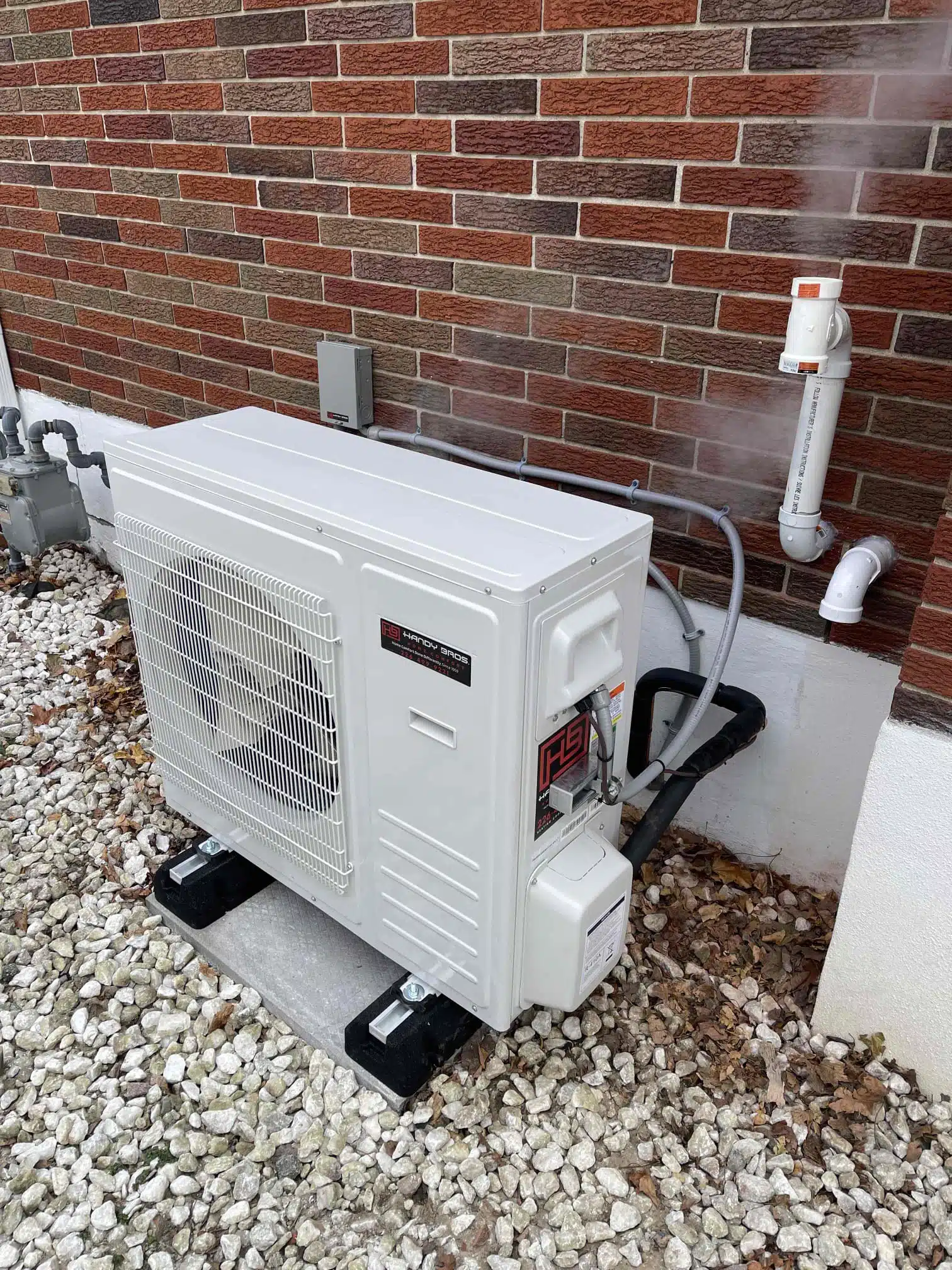
- You may notice steam or vapour outside
- The system may temporarily shift operation to clear frost
- Indoor air may feel different for a few minutes depending on the setup
That last point catches homeowners off guard. They think the system “stopped heating,” when in fact it may simply be going through a normal defrost sequence.
This is one of those moments where education matters. A properly functioning system still has to deal with real winter weather, whether you are relying on heat pump installation in London, heat pump installation in Windsor-Essex, or heat pump installation in Leamington. Defrost is part of that reality. The goal is not to avoid defrost altogether. The goal is to have a system designed, installed, and controlled properly so defrost happens as intended and comfort is maintained.
Backup Heat: Normal, Useful, and Often Misunderstood
Homeowners also hear the phrase “backup heat” and immediately assume something is wrong.
Not true.
Depending on the system, backup heat may be part of the design. It can assist in more extreme outdoor conditions or during certain recovery periods. HRAI notes that modern heat pumps can keep the average home warm even on very cold winter days with little need for backup heating, but “little need” does not mean “never.”
What matters most is understanding when backup heat is expected and whether your home’s system has been designed around your home’s actual needs. That comes back to proper heat-loss calculations, local climate conditions, insulation levels, air leakage, windows, and homeowner lifestyle. HRAI says all of those should be part of the sizing process.
Homeowner takeaway:
Backup heat is not automatically a problem.
Unexpected or excessive backup heat use is worth investigating.
That is a big difference.
Noise: What Is Normal and What Is Not
Heat pumps are not silent, but they should not be alarming either.
Modern systems have come a long way. DOE points to variable-speed fans and inverter-driven systems as improvements that help minimize disruption and reduce noise. Still, some sound is completely normal. You may hear the outdoor unit start, ramp up, change speed, or shift during a defrost cycle.
Sounds that can be normal:
- Fan operation outdoors
- Changes in compressor speed
- A temporary change in sound during defrost
- Air movement through ductwork
Sounds that should be checked:
- Rattling or banging
- Sudden loud vibration
- Repeated harsh start-stop cycling
- New noises that were not there before
Again, this is where design and preparation matter. Poor sizing can increase noise. Poor installation can increase noise. Poor airflow can increase noise. At Handy Bros., we believe the customer experience is shaped long before installation day. Our CHISEL-based preparation systems, POD system, and AAA job preparation are designed to create consistent, repeatable quality and a better result for the homeowner.
Humidity: One of the Most Overlooked Comfort Factors
A lot of homeowners judge comfort by temperature alone, but humidity plays a major role too.
DOE notes that high-efficiency heat pumps can dehumidify better than standard central air conditioners, and improved coil design plus inverter-driven operation can improve humidity control. That matters because comfort is not just about making the home colder in summer or warmer in winter. It is about making the home feel better.
In cooling season, a properly operating heat pump can help remove indoor humidity and improve comfort. But just like heating, performance depends on setup. HRAI warns that oversized cooling equipment may not run long enough to dehumidify properly.
What that means for homeowners:
- Bigger is not always better
- Proper sizing matters for humidity as much as temperature
- Short cycling can hurt comfort
- Good installation supports better year-round results
This is why we push back on “rule of thumb” replacements. Swapping old equipment for the same size without a real calculation is not good enough. HRAI specifically warns homeowners not to rely on simple rules of thumb and says a full heat-loss and heat-gain calculation is essential. And when homeowners start comparing options, this breakdown of heat pump cost in Ontario helps explain why proper design matters just as much as the equipment itself.
Thermostat Behaviour: Stop Fighting the System
Most heat pump frustration starts at the thermostat.
Homeowners are used to making quick changes and expecting instant results. But with a heat pump, thermostat strategy matters much more. If the thermostat is programmed poorly, if settings are misunderstood, or if the controls are not matched to the system properly, the homeowner experience can suffer.
What we tell homeowners:
- Do not keep switching between settings without a reason
- Learn what your auxiliary or emergency heat indicators mean
- Ask your installer how your thermostat is supposed to behave in winter
- Avoid trying to “force” faster heat with big jumps in setpoint
- Make sure everyone in the home understands the basics
This is part of doing home comfort differently. Great HVAC service is not just dropping equipment into a house. It is educating the homeowner so the system can actually perform the way it was designed to.
The Real Secret: How You Use a Heat Pump Depends on How It Was Installed
This is the part most online articles miss.
A heat pump can be an excellent comfort solution. It can heat. It can cool. It can run efficiently. It can work in cold weather. But none of that changes the fact that the design and installation process matter tremendously. DOE says heat pumps perform well when properly installed, and HRAI stresses full calculations rather than shortcuts.
At Handy Bros., we are not interested in generic HVAC. We are interested in delivering a better homeowner experience. That is why our team has built systems around preparation, consistency, and quality. From our proprietary POD system to AAA job preparation to final visual accountability, we have built our process to raise the bar. That is how we do Home Comfort Done Differently.
What Homeowners in Southwestern Ontario Should Remember
If you are using a heat pump in Southwestern Ontario, here is the simple version:
Comfort differences:
Standard expectation: Air may feel milder than furnace heat
What it usually means: The system is maintaining temperature over longer runtimes
Defrost cycles:
Standard expectation: Frost can build on the outdoor coil in winter
What it usually means: A normal defrost cycle may activate to clear it
Backup heat:
Standard expectation: It may assist in colder conditions or certain recovery situations
What it usually means: Not necessarily a problem unless usage is excessive or unexpected
Noise:
Standard expectation: You may hear speed changes and normal operating sounds
What it usually means: Modern systems can still make some noise, especially outdoors and during defrost
Humidity:
Standard expectation: A good heat pump can improve summer dehumidification
What it usually means: Proper sizing and runtime are a huge part of comfort
Thermostat behaviour:
Standard expectation: Steady settings often work better than constant changes
What it usually means: The system is designed to maintain comfort, not be fought all day