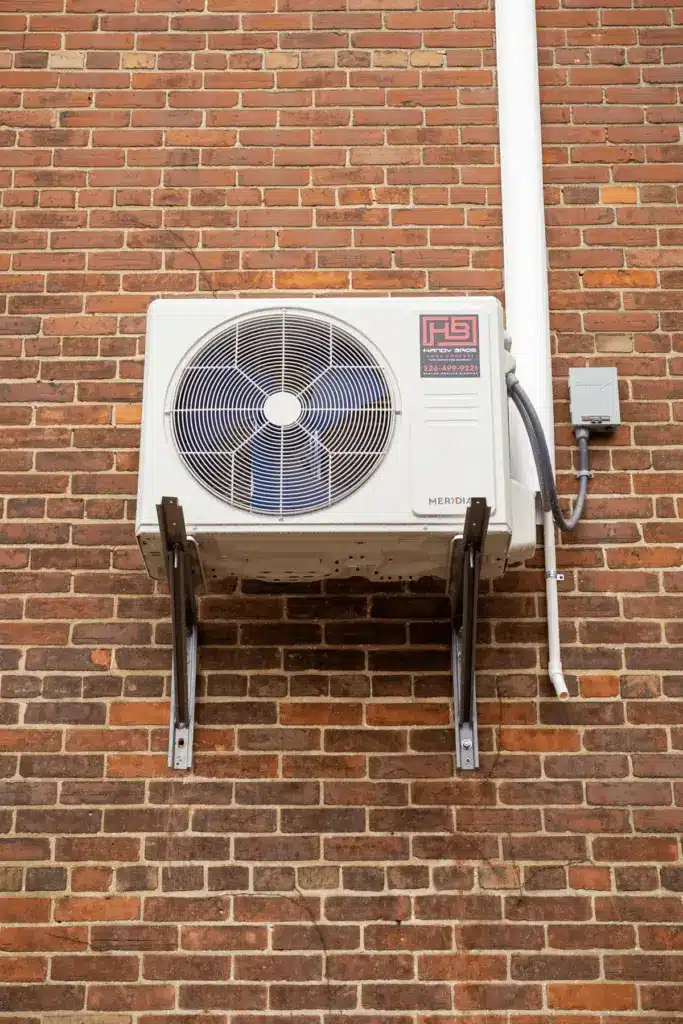
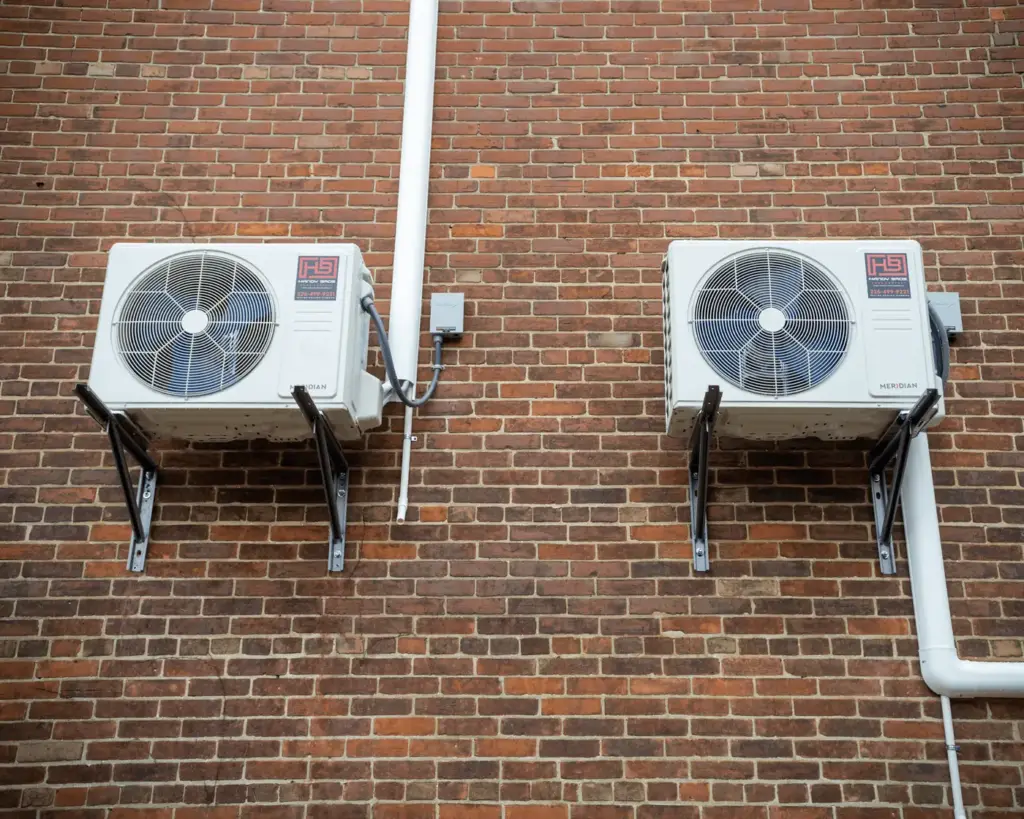
Ductless mini-split Homeowners Guide
Key Takeaways:
- A ductless mini-split heats and cools without traditional ductwork. It uses an outdoor unit connected to one or more indoor heads.
- Best fit: problem rooms, additions, garages, workshops, apartments, bonus rooms, and spaces your current HVAC system does not handle well.
- It can provide both cooling and heating. For Ontario homes, cold-climate performance matters if you expect it to heat during winter.
- One head vs. multiple zones depends on the home. Layout, insulation, sun exposure, room size, and comfort goals all affect the right setup.
- The cheapest online unit is not always the best value. Sizing, placement, electrical, drainage, refrigerant lines, startup, and warranty support all matter.
- Installed cost varies for good reasons. Equipment tier, number of zones, line-set routing, electrical work, mounting location, and installation complexity can all change the quote.
- Main benefits: targeted comfort, no ductwork, quiet operation, zoning flexibility, and efficient heating/cooling for specific spaces.
- Main drawbacks: upfront cost, visible indoor heads, filter maintenance, installation complexity, and the fact that ductless is not always the right whole-home solution.


What space in your home are you trying to fix?
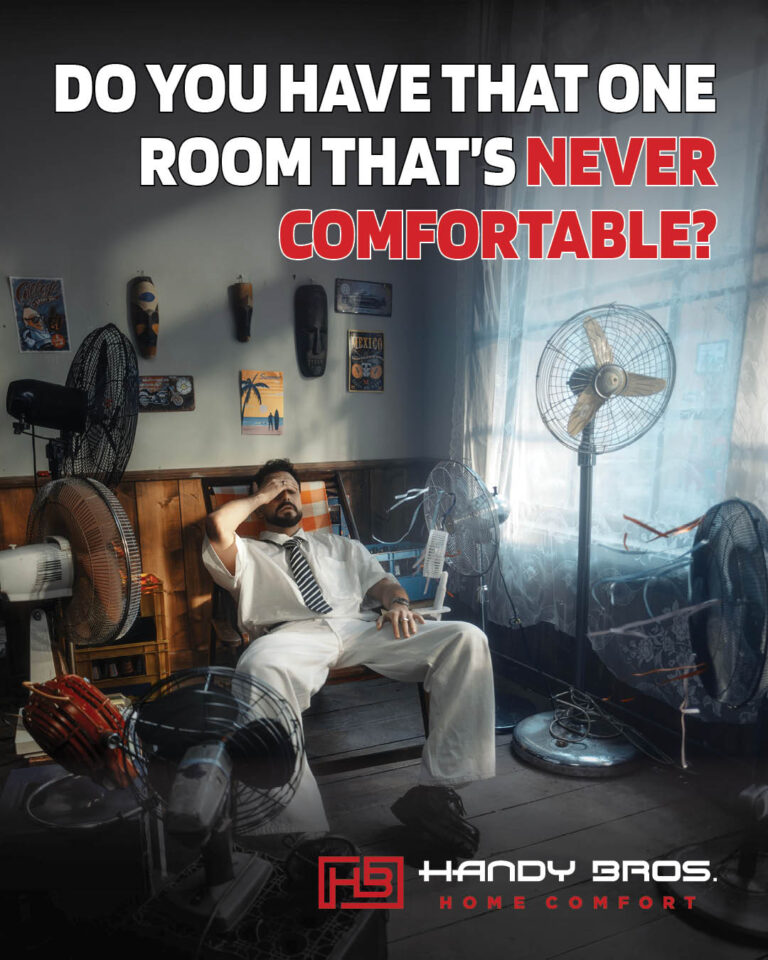
If one room is always fighting the rest of the house, ductless may be worth comparing before replacing your central equipment.
If the second story turns into a sauna every summer, ductless can cool the room your central system struggles to reach.
Some rooms are always too hot, too cold, stuffy, or hard to control. Ductless gives that room its own comfort source.
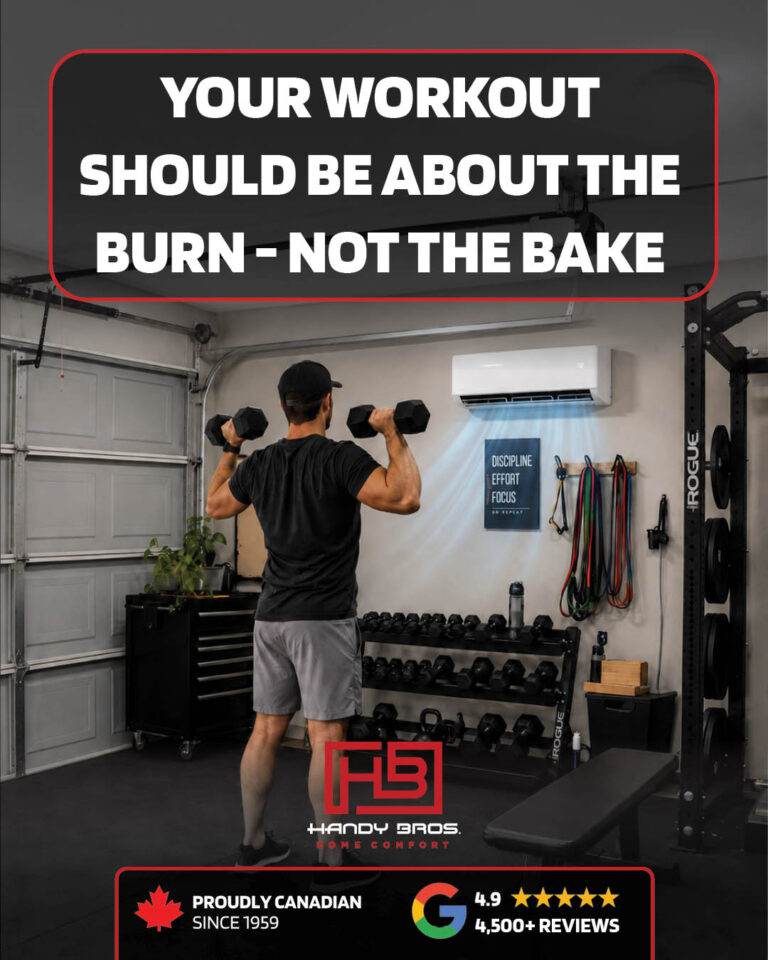
Your workout should be about the burn, not the bake. Garage applications depend on insulation, electrical, placement, and installation requirements.
If your main system does not serve the space well, or adding ductwork does not make sense, ductless may be a cleaner way to add targeted heating and cooling.
Current Ductless AC Deals
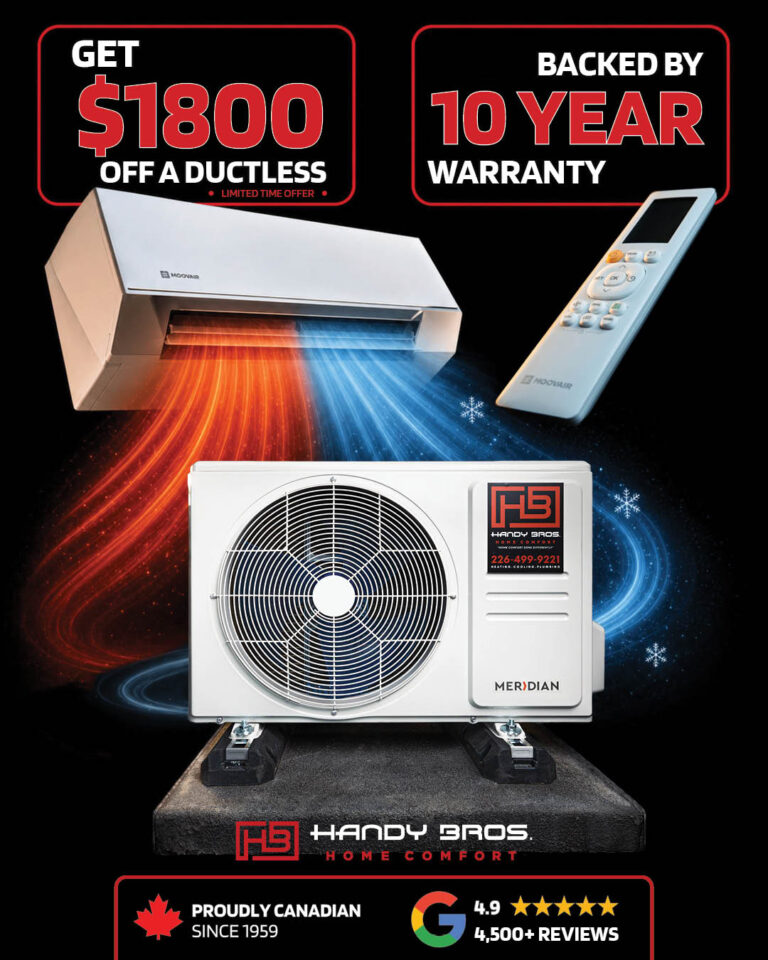
Handy Bros is help homeowners get a new ductless with these limited time deals:
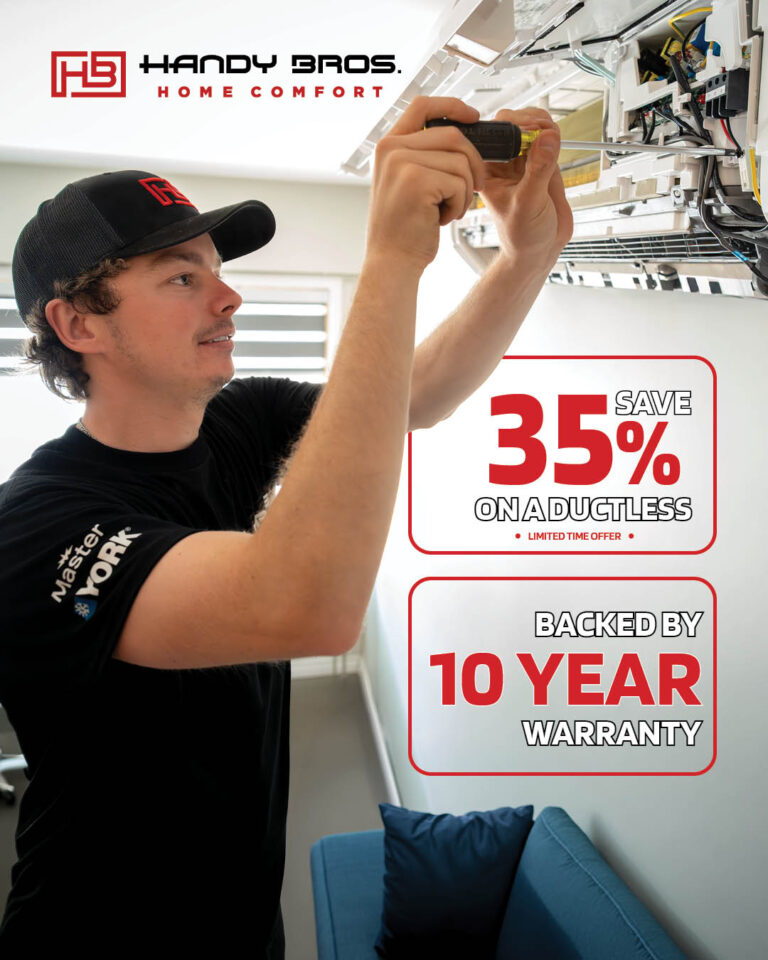
- Get $1,800 off a Ductless System (35% SAVINGS)
- AAA-Certified Installation
- Backed by 10-year parts & labor warranty
The best option depends on the home, the system, the number of zones, installation details, and current campaign rules.
Subject to: offer availability, eligibility, warranty terms, and campaign timing may vary. Confirm details during your consultation.


Start with experts.
If your upstairs is too hot, your garage gym is unusable, or one space in your home is hard to control, ductless may be the right solution.
Start with a FREE no-obligation ductless installation consultation so the system is designed around the space, the home, and the install details.
The most important day in the life of a mini-split is the day it is installed.
A mini-split is not just a box on the wall. It is heating and cooling equipment.
The equipment matters, but installation decides whether it performs the way the homeowner expects.
- what problem you are trying to solve
- how much capacity the space needs
- where the indoor head should go
- where the outdoor equipment should go
- how refrigerant lines, condensate drainage, and electrical work will be handled
- how snow, ice, vibration, and maintenance access will be handled
- how the finished install will look on the home
- who can support the system later
This guide is not here to convince you to buy any mini-split. It is here to help you avoid the wrong one.
What is a ductless mini-split system?
A ductless mini-split system is heating and cooling equipment that does not rely on traditional ductwork.
Instead of pushing air through ducts, it uses an outdoor unit connected to one or more indoor heads by refrigerant lines, electrical wiring, and condensate drainage.
In summer, the system moves heat out of the space. In heating mode, a ductless heat pump moves heat back in, which is why the same system can often provide both cooling and heating.
For most homeowners, the important question is simple: what space are you trying to fix?
Ductless mini splits are commonly used for single rooms, small apartments, garages, additions, workshops, bonus rooms, and other targeted areas that are hard to heat or cool with the existing system.
You may also see comparison terms like ductless air conditioner, split air conditioner, split heat pump, single-zone mini-split, wall mount mini-split, variable-capacity mini-split.
Those terms can help when comparing model series, accessories, delivery options, and installation support, but the wording matters less than whether the equipment and install plan fit the space.
The key is choosing the right ductless equipment for the home, not just buying the cheapest unit online.
Where ductless air conditioners usually makes the most sense
Ductless is strongest when the problem is specific, the ducts are missing or weak, or one part of the home needs targeted temperature control.
Best when the second story is consistently hotter than the main floor and the central system cannot push enough comfort upstairs.
Best when the room is exposed to more heat and cold because it sits over an unconditioned garage.
Best when one room needs comfort during the day while the rest of the home does not.
Best when the space is insulated enough to hold comfort and the installation can be done safely and cleanly.
Best when adding ductwork is expensive, awkward, or not realistic.
Best when the home needs cooling or targeted comfort but does not have central air ducts.
Best when the basement is damp, stuffy, or disconnected from the main system.
Best when the central system works for most of the house but one room never gets enough airflow.
Picture ductless comfort in your home
Ductless can be designed for one problem room or several zones across the home.
The right setup depends on layout, insulation, current heating/cooling equipment, electrical needs, budget, rebates, and the problem you are trying to solve.
Best for additions, garages, sunrooms, or one hard-to-comfort room.
YOUR COMFORT PLAN
Best for two-storey comfort, upstairs bedrooms, or grouped problem areas.
YOUR COMFORT PLAN
Best for older home, electric baseboards, boiler-heated homes, renovations, or homes without central air.
If the ducts are the problem, ductless may be smarter.
A lot of temperature problems are not caused by the furnace or air conditioner alone.
They are caused by the way air moves through the home.
If a space has weak airflow, long runs, poor duct design, attic losses, crawl space issues, bad insulation, or no ducts at all, replacing central equipment may not solve the problem.
Ductless serves the space directly. If the air-distribution system is the weak link, it lets you stop fighting it.
NOT ALL HEAT PUMPS ARE BUILT FOR AN ONTARIO WINTER.
They may look similar online. They do not perform the same in deep cold.
CHEAPER STANDARD MODEL
TRUE COLD-CLIMATE SYSTEM
THE WRONG MODEL WILL LEAVE YOU COLD, COST YOU MORE — OR BOTH.
Choose a model that is not designed for your home’s winter conditions and it can lose heating capacity just when you need it most. The result may be a cold home, expensive backup heat, or both.
A low online price may also leave out the planning, commissioning, and local support that turn equipment into a dependable comfort system.
In Ontario, you do not just want a mini-split.
You NEED a cold-climate heat pump.
Standard mini-splits and true cold-climate systems can look similar online.
They are not always built for the same job.
A cold-climate model is designed to keep producing heat when outdoor temperatures drop. That matters in Southwestern Ontario.
If the goal is broader heating and cooling beyond one problem space, compare whole-home heat pump systems as well.
For installation, repair, and maintenance support, Handy Bros. also provides heat pump services.
- Is this a true cold-climate system?
- How does it perform in low outdoor temperatures?
- What heating capacity does it still deliver when it is cold?
- Is it sized for this space and this home?
- Can it be maintained locally?
- What warranty and parts support come with it?
How HVAC Contractors think about ductless sizing
Square footage is only the starting point.
A proper ductless recommendation should consider the space, the home, and the way it is used.
A rough online BTU calculator may help you understand the range, but it cannot see your insulation, windows, sun exposure, ceiling height, garage below, door habits, electrical requirements, or Ontario winter conditions.
The goal is not the biggest mini-split. The goal is the right-sized system for the space and the home.
Bigger is not better. Right-sized is better.
- Too small: may struggle during extreme temperatures, run constantly, or fail to heat/cool properly.
- Too large: may short cycle, cost more upfront, control humidity poorly, or create uneven comfort.
More sun can increase cooling load.
More exposure to heat and cold.
More air volume to condition.
Bigger comfort swings and more load.
More heat gain and heat loss.
Less help from the central system.
Ductless is not just for air conditioning.
A ductless HVAC system can cool in summer and heat when temperatures drop.
Many systems also include dry or dehumidification modes that can help in damp or humid spaces.
Compared with many window air conditioners, the main benefits of ductless air conditioning are quieter operation, targeted temperature control, and better efficiency when the equipment is properly matched to the load.
Proper indoor unit placement makes a difference.
The goal is not just colder air.
The goal is a space that finally feels right.
- more consistent temperature
- quieter operation
- less harsh cycling
- better humidity control
- improved efficiency when properly matched to the load
Pros, cons, and benefits of ductless systems
Ductless can be a strong fit when one part of the house needs targeted heating and cooling, but it is not the right answer for every situation.
Use this table to compare the upside with the installation realities.
| Topic | What it means |
|---|---|
| Benefits | Targeted heating and cooling for a garage, bonus room, addition, workshop, upstairs bedroom, or other space that never feels right. |
| Pros | No new duct runs, quiet operation, flexible indoor placement, and efficient performance when the system is sized and installed correctly. |
| Cons | Higher upfront cost than a window unit, visible indoor heads, regular filter care, and placement decisions that matter. |
| Cheaper online equipment | Lower equipment prices online or in local marketplace posts can look tempting. The hard part starts after checkout: sizing, electrical, wall penetration, line-set routing, condensate drainage, vacuum testing, refrigerant handling, commissioning, warranty registration, and finding a licensed HVAC technician willing to stand behind equipment they did not supply. |
| Professional installation | A clean install helps the system heat, cool, drain, and last properly. Poor installation can erase the savings from a cheap kit. |
| Long-term ownership | Parts availability, brand support, warranty terms, filter care, and future service all matter. |
The cheapest kit is not always the cheapest finished job.
The best result comes from matching the equipment, room, and installation details before anyone drills a hole in the wall.
Installation details matter.
Airflow, sleep/sitting areas, furniture, ceiling height, sun exposure, appearance, drainage, noise sensitivity, and service access.
Clearance, snow risk, drainage/ice, mounting method, vibration, noise location, service access, and line-set routing.
Straight routing, UV-protected covers, clean wall penetrations, proper sealing, safe drainage, and finished appearance.
Assessment, sizing, model selection, placement, electrical, wall penetrations, drainage, mounting, startup, walkthrough, warranty, and maintenance instructions.
What affects installed cost in Ontario?
The online price of a mini-split is not the same thing as the cost of a complete installed system.
A professional quote should account for the equipment, the home, the installation details, and the support behind the system.
Ask what is included, what is excluded, and what could change after the consultation.
More indoor heads, line sets, controls, and design work.
Low-temperature heating performance varies by model.
Dedicated circuits, disconnects, or panel considerations may apply.
Drainage, airflow, snow clearance, vibration, and service access matter.
Finished appearance and protection affect the scope.
Long-term support changes the value of the quote.
Eligibility and timing can affect final cost.
Cheap online kit vs professional cold-climate system
LOW ONLINE PRICE ≠ COMPLETE HVAC SYSTEM
It is easy to find a low-cost mini-split online.
The price can look attractive.
But the online equipment price is not the same thing as a complete installed HVAC system.
The low online price may not include electrical planning, condensate drainage planning, line-set cover planning, outdoor mounting for Ontario winter, startup and commissioning, warranty registration, or local service support.
The kit in the cart is only the beginning.
CHEAP ONLINE / DIY KIT
PRO COLD-CLIMATE SYSTEM
COLD-WEATHER HEAT — May struggle when Ontario winter shows up.
Selected for Canadian temperature swings.
SIZING — Often guessed from square footage.
Matched to rooms, layout, load, and comfort goals.
INSTALL DETAILS — Electrical, drainage, line set, wall penetration: your problem.
Planned before install, not discovered after delivery.
SERVICE + PARTS — Hard to service. Parts and warranty can be unclear.
Warranty registration and local service access.
TRUE COST — Cheap today can mean buying twice.
Compared as a long-term HVAC system.
IF IT FAILS IN 3–5 YEARS, WAS IT REALLY CHEAPER?
Not every online kit fails. The risk is that checkout price hides work a complete HVAC system still needs.
Ductless brands homeowners compare
Based on Handy Bros.’ 67 years of field experience, many cheap online ductless kits become replacement candidates in the 3–5 year range, especially when they are not true cold-climate systems, do not have reliable parts support, or were not installed with long-term support in mind.
That does not mean every online kit fails on the same timeline.
Homeowners may compare ductless brands such as Mitsubishi Electric, Daikin, Fujitsu, LG, Samsung, Panasonic, Toshiba, Carrier, Bryant, Lennox, Trane, RunTru, Bosch, Rheem, Ruud, York, Coleman, Napoleon, Gree, Midea, Haier, Hisense, Moovair, Senville, MRCOOL, Tosot, Cooper & Hunter, Pioneer, Klimaire, Blueridge, AUX, Perfect Aire, Friedrich, Comfort-Aire, and Century.
Brands, warranty terms, cold-climate performance, indoor unit options, parts availability, and local support can matter more than the logo alone.
The cheapest option can carry hidden risks that do not show up in the checkout cart.

Online kit: may be limited or unclear.
Professional system: selected for Canadian temperature swings.
Online kit: often guessed by square footage.
Professional system: based on space, layout, load, use, and temperature-control goals.
Online kit: may be difficult later.
Professional system: installed with service access in mind.
Online kit: unclear.
Professional system: compared as a long-term HVAC system.
SEER2, HSPF2, COP, and the 300% point
High cooling efficiency is good.
But if you want a ductless system that heats and cools, you need to understand both cooling efficiency and heating performance.
SEER2 measures cooling-season efficiency. HSPF2 measures heating-season efficiency. COP compares how much heat the system delivers to how much electrical power it uses at a specific operating condition.
Natural Resources Canada explains COP with a simple example:
if a heat pump uses 1 kW of electricity to transfer 3 kW of heat, the COP is 3.
That does not mean your utility bill drops by 300%.
It means the system can move about three units of heat for every one unit of electrical input, depending on equipment, outdoor temperature, sizing, and installation.
BEFORE YOU BUY A
SEER2, HSPF2 & COP — the homeowner version
SEER2
Cooling efficiency over summer
HSPF2
Heating efficiency over winter
COP
Heat moved per kW at this temperature
COP 3 ≠ 300% lower bill
It means 3 units of heat moved for 1 unit of electricity.
WHAT HANDY BROS. CHECKS BEFORE RECOMMENDING DUCTLESS
Outdoor temperature
Right sizing
Install quality
Equipment rating
Ask about refrigerant before you choose a system.
The HVAC industry is moving through refrigerant changes.
You do not need to become a refrigerant expert.
But you should ask a few basic questions.
- What refrigerant does this system use?
- Is this model current and supported?
- Does refrigerant type affect future service?
- Does it affect parts availability?
- Does the warranty depend on professional installation or registration?
A good contractor should be able to explain what system they recommend and why that system makes sense right now.
Be careful when comparing ductless quotes.
A low quote can be attractive, but if the quote skips the details that determine performance, it may not be the better deal.
- cold-climate performance
- sizing method
- indoor and outdoor placement
- electrical scope
- drainage plan
- line-set covers
- warranty registration
- current offers or rebates
- startup and commissioning
- service support
What happens during your no-obligation ductless consultation?
The consultation is where the system starts to become specific to your home.
Handy Bros. should not be guessing from a product page or a square-foot chart.
Review the room or rooms you are trying to fix.
Look at your current heating and cooling setup.
Talk through single-zone vs multi-zone options.
Review indoor head placement, airflow, outdoor equipment placement, snow clearance, drainage, and maintenance access.
Discuss electrical, line-set routing, and finished appearance.
Confirm current offer, warranty, rebate, and financing details where applicable.
Price Ranges
1 Zone Ductless
-
Single Zone
-
AAA Certified Installation
-
10 Year Parts & Labor Warranty
2-3 Zone Ductless
-
Dual+ Zone
-
AAA Certified Installation
-
10 Year Parts & Labor Warranty
4-5+ Zone Ductless
-
Multi+ Zone
-
AAA Certified Installation
-
10 Year Parts & Labor Warranty
What happens on install day?
A clean ductless installation should feel organized, not improvised.
The exact process depends on the home and system.
Protect the work area and confirm placement.
Mount the indoor head in the planned location.
Route refrigerant lines, condensate drainage, and wiring.
Set the outdoor unit on the planned stand, bracket, or pad.
Connect, test, and commission the system.
Walk you through controls, maintenance, warranty, and next steps.
What maintenance does a ductless system need?
A ductless system is not set-it-and-forget-it.
Regular care helps protect performance, efficiency, and equipment life.
- clean or wash indoor filters as recommended
- keep the indoor head clear of obstructions
- keep the outdoor unit clear of leaves, snow, ice, and debris
- watch for drainage or moisture issues
- schedule professional maintenance
- call for support if performance, noise, or temperature control changes
Maintenance is one reason local support matters.
Why homeowners choose Handy Bros. for ductless systems
Handy Bros. does not just hang equipment on the wall.
We help homeowners understand the problem, compare the options, choose a proper cold-climate system, and install it with details that protect long-term performance.
- local HVAC experience
- cold-climate ductless recommendations
- space-by-space planning
- one-zone and multi-zone options
- clean line-set and curb appeal planning
- outdoor placement for Ontario weather
- no-obligation consultation
- financing and rebate guidance where applicable
- warranty support where applicable
- after-installation support
- 4.9-star Google rating / 4,500+ reviews
- proudly Canadian since 1959
The goal is simple:
give you a ductless system that actually fits your home, not just the cheapest box on the wall.
Before you say yes to a ductless quote, ask these questions.
Use the Ontario Homeowner’s Ductless Buyer Guide before comparing quotes.
- cold-climate heating performance
- SEER2, HSPF2, and COP
- proper sizing
- one-zone vs multi-zone planning
- indoor and outdoor placement
- online kit risks
- installation scope
- warranty, rebates, financing, and offers
FAQ
Can a cold-climate system really heat my space in winter?
Yes, if it is a true cold-climate heat pump, properly selected and installed for the room and home.
Does ductless provide both heating and cooling?
Yes. A ductless mini-split heat pump can provide cooling in summer and heating when temperatures drop.
Is ductless only for one space?
No. Ductless can be used for one problem room or designed as a multi-zone system with several indoor heads.
How many indoor heads do I need?
It depends on the rooms you want to condition, the home layout, insulation, current system, electrical requirements, and whether ductless is supplemental or part of a larger home comfort strategy.
How do I know what size ductless system I need?
A proper recommendation should consider more than square footage. The room’s insulation, windows, ceiling height, sun exposure, location in the home, use pattern, and Ontario weather all matter.
What affects ductless cost?
Cost can be affected by zones, equipment tier, cold-climate performance, electrical requirements, placement, line-set routing, drainage, warranty, service support, rebates, financing, and current offers.
Will ductless help with humidity?
Many ductless systems include dry or dehumidification modes that can help with room comfort. Whether that replaces other humidity control depends on the home and the system.
Is ductless quiet?
Quality ductless systems are designed for quiet operation, especially when they are running at lower speeds. Placement and installation quality also affect perceived noise.
Is a cheap online mini-split kit a good idea?
It depends on what you are comparing. The online equipment price is not the same as a complete, properly installed, cold-climate HVAC system.
Is a ductless mini split worth it?
A ductless mini split can be worth it when you need targeted heating and cooling for a room, addition, garage, workshop, or area your existing system does not handle well. The value depends on the space, system sizing, equipment quality, installation details, and how often you will use it.
What are the disadvantages of a mini split?
The main disadvantages are upfront installed cost, visible indoor heads, placement limits, electrical and drainage requirements, regular filter maintenance, and the need for careful sizing and installation. A mini split is not always the right replacement for every whole-home HVAC problem, which is why the consultation matters.
Why do ductless quotes vary so much?
Quotes can vary because of system quality, zones, cold-climate performance, electrical work, routing, mounting, drainage, warranty, rebates, and installation details.
What does “no-obligation consultation” mean?
It means Handy Bros. can review your room, comfort problem, and ductless options without pressuring you into a decision.
Thinking about ductless? Start with the right consultation.
If your upstairs is too hot, your garage gym is unusable, or one space in your home is hard to control, ductless may be the right solution. But do not choose based on the cheapest equipment online. Choose a true cold-climate system, sized for your home, installed cleanly, and supported by a local team.
About the Author
Mitch White
CEO of Handy Bros.
Mitch has been a valued member of the Handy Bros. team for over 10 years.
He began his journey in the installation department, quickly rising through the ranks into management, where he successfully led multiple departments.
In 2018, Mitch and his brother Nic took ownership of Handy Bros., continuing the legacy with a fresh vision—Home Comfort Done Differently.
Mitch is happily married to his beautiful wife, Jessica, and is a proud, devoted father.
Outside of work, he’s passionate about health and fitness, and has a deep appreciation for delicious Portuguese cuisine.
When it comes to travel, anywhere in Southern Europe is his happy place.
References and further reading
- Natural Resources Canada: Heating and cooling with a heat pump
- Natural Resources Canada: Heat Pump Technologies fact sheet
- Northeast Energy Efficiency Partnerships: Cold Climate Air Source Heat Pump Specification & Product List
- NEEP: Cold Climate Air Source Heat Pump Specification, Version 4.0
- ENERGY STAR: Ductless Heating & Cooling
- ENERGY STAR: Version 6.2 Heat Pump Specification, March 2025
- U.S. Department of Energy: Heat Pumps
- Building America Solution Center: Ductless Mini-Split Heat Pumps
- AHRI Certification Directory
- Enbridge Gas: Rebates and energy conservation